

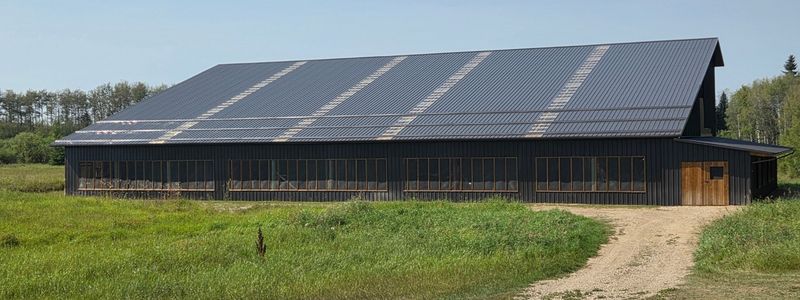
Inside Medicine River Wildlife Centre's New Raptor Compound
There is something pretty special about seeing what can happen when a community comes together for wildlife.
We recently had the privilege of attending a Donor & Volunteer Appreciation Day at Medicine River Wildlife Centre, where we were given a behind-the-scenes tour of their newly completed Raptor Compound.
We had followed this project along the way, but standing inside the finished compound and hearing the stories behind the design gave us a whole new appreciation for just how much thought, work and generosity went into creating it.
42 Years of Giving Wildlife a Second Chance
Medicine River Wildlife Centre was founded 42 years ago by Carol Kelly, and what makes its story even more special is that it has truly become a family endeavour.
For more than four decades, Carol and her family have dedicated their lives to helping orphaned and injured wildlife. Today, Carol, Grant, and their children, Erin and Todd, continue to be part of the heart and hands behind the Centre.
Of course, it takes more than one family to keep a busy wildlife centre running. The Kelly family is supported by a small but dedicated team, including Gwen Marshall - Wildlife Conflict Specialist, Julie Lay - Financial Administrator, Lil Duperron - Drayton Valley First Aid Station, Judy Boyd - Fostering Researcher, Brittany Blundell - Wildlife Hospital Coordinator, along with seasonal volunteers who lend a hand during the Centre's busiest months. Together, they help keep the many different pieces of wildlife rescue, rehabilitation, education, and day-to-day operations moving forward.


Over those 42 years, the Centre has grown tremendously. Today, they care for roughly 2000 patients each year, representing approximately 230 different species. Their goal is to repair, rehabilitate and, whenever possible, release these animals back into the wild, where they belong.
A Day to Celebrate
Before heading out to tour the new Raptor Compound, we gathered with the donors and volunteers who helped make this incredible project possible.
Erin Young welcomed everyone, setting the stage for an afternoon that was as much about the celebrating the people behind the project as it was about seeing the finished compound.
How the Raptor Compound Came to Be
Every project like this begins with a story, and who better to share this than Carol Kelly, founder of Medicine River Wildlife Centre.
A few years ago, a devastating storm destroyed the Centre's eagle cage, killing two eagles and injuring another. With other aging cages also beginning to deteriorate, the need for something better became clear.
What started out of necessity grew into a vision for a facility that could better meet the needs of the birds in their care for many years to come.
Here, Carol shares how the idea for the new Raptor Compound began.
And then the community stepped forward.
Fortis Inc. donated and installed 70 large poles for the structure. An estate donation followed, along with donations both large and small, and countless hours of donated labour, including significant help from an inmate crew from the Bowden Institution.
Altogether, the Raptor Compound represents an investment of approximately a quarter of a million dollars, accomplished without borrowed money. Various stages of construction were completed as money allowed, thus taking 5 years to complete this amazing structure.
Built With Birds in Mind
Once those poles were in place, the sheer size of the Raptor Compound began to take shape.
But this wasn't simply about building a large structure. Every section had to be designed around the very different birds that would eventually use it.
The finished compound measures approximately 120 feet long by 72 feet wide, with enclosures ranging from 12 feet high to an impressive 30 feet for the eagle enclosure.
Grant Kelly takes us through the structure and explains some of the thinking behind its design.
Making Use of What Nature Provides
Even something as essential as supplying water required careful thought.
Rather than relying solely on conventional water source, the compound incorporates a rainwater collection system to help provide water for the birds.
Grant explains how this clever system works.

Come Inside With Us

Donors, volunteers and guests make their way into the newly completed Raptor Compound for a closer look.
Now came the part we had really been looking forward to... stepping inside and seeing the compound from the birds' perspective.
Starting With the Small Raptors
Our first stop was one of the four cages created for smaller birds of prey, including falcons, merlins, kestrels and hawks.
Even the placement of the cages, walls and perches has been carefully considered. The back wall is completely solid because larger birds are predators to smaller ones, so the design had to think about not only where each bird would be housed, but also who could see whom without feeling threatened.
Come inside for a closer look...
More Room to Fly
Moving farther into the compound, the enclosures become considerably larger.
Two 60-foot-long cages have been built end to end for raptors that need more room to fly than the four smaller cages can provide. Having different sizes of flight spaces allows the Centre to accommodate the varying needs of the birds that come into their care.


A Very Special Great Horned Owl Enclosure
One of the most fascinating stops on our tour was the Great Horned Owl enclosure.
This space is home to two permanent resident females who are unable to be released back into the wild. Yet they have done something rather remarkable, laying eggs and hatching owlets in recent years, something very rare for owls living in captivity. Once their owlets are old enough to learn how to fly and hunt, they are then fostered into existing owl families in the wild, where their new parents will teach them how to survive in the wild.
Come inside the enclosure with us for a closer look at the space these beautiful owls call home, along with 10 other owls who are being treated so they can be released back into the wild.


The Biggest Cage of Them All
And then we came to the largest enclosure in the compound, the eagle cage.
Stretching the full 120-foot length of the building and reaching 30 feet high, this impressive flight space gives these powerful birds the room they need to fly and rebuild their strength.
It is also home to a very special permanent resident ealge who has been at the Centre for 16 years. Although she cannot return to the wild herself, whenever an eaglet is brought into the Centre, she is there to help nurture it. Isn't nature amazing?!
Take a look inside this incredible space.


More Than Just a Buidling
For us, the most meaningful part of visiting the completed Raptor Compound wasn't simply seeing a new building.
It was seeing what that building represents.
A storm may have started this journey, but what followed was a community of people deciding these animals were worth helping.
Some donated materials. Some donated money. Some donated their time and labour. Others simply found whatever way they could to help.
And together, they created something that will give injured and orphaned birds of prey a safe place to recover and, hopefully, eventually spread their wings once again in the wild.
This is exactly why giving back to wildlife rehabilitation has always been such an important part of what we do at Back to Nature Apparel.
We photograph wildlife because we love being in their world. We put those photographs onto the products we create because we want others to feel that connection too. And when those products allows us to give something back to organizations doing the hands-on work of rescuing, rehabilitating, educating and releasing wildlife back into the wild, it completes the circle for us by giving back to nature and the very wildlife that inspires us.
A little Celebration... and One Special Guest
After our tour, it was time to head back to the Centre and celebrate the people who helped make it all possible, complete with a little cake!


It was especially nice for us to share the afternoon with Carol, as Stan also serves and donates his time on the Medicine River Board of Directors. Years ago we spent a number of evenings helping Carol and her staff locate foster moms for some orphaned fawns. After experiencing the amazing dedication they put into this program, we knew it was something we wanted to support and help make a difference.
And, of course, there was one more very special guest to visit with.
Otis is the Centre's Great Horned Owl educational ambassador and, over the years, has helped bring wildlife education to countless people through visits to schools, nursing homes and community events.

And Otis Gets the Last Word...
Before we left, Otis had one final message of his own for all the donors, volunteers and supporters who helped make the new Raptor Compound possible.
We think he said it best 🙏❤️
Read more
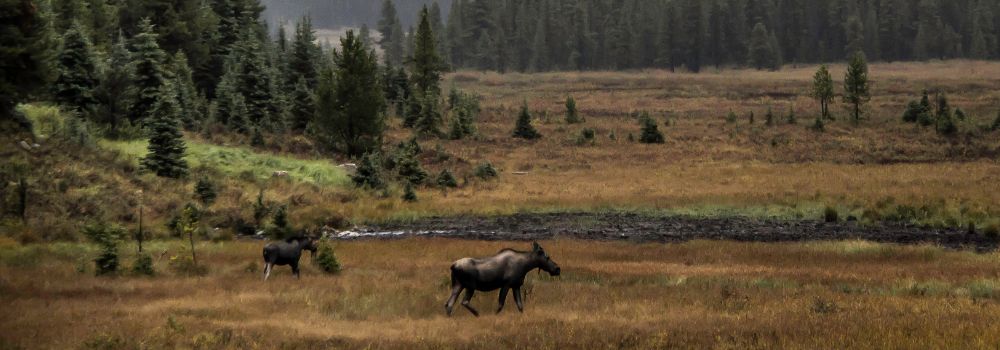
A Journey from Grief to Purpose Through Nature: An Earth Day Reflection
There are moments in life that don’t just change your direction - they erase the map entirely. This Earth Day, we share a deeply personal journey of grief, healing, and how nature helped guide us b...
Read more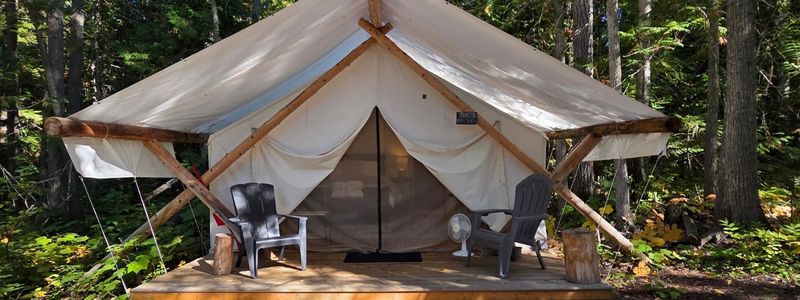
Reconnecting with Nature Through Glamping
After more than 45 years since our early tent-camping days, we discovered a new way to sleep beneath the trees. Our first glamping experience near Wells Gray Provincial Park reminded us that reconn...
Read more
Leave a comment
This site is protected by hCaptcha and the hCaptcha Privacy Policy and Terms of Service apply.