

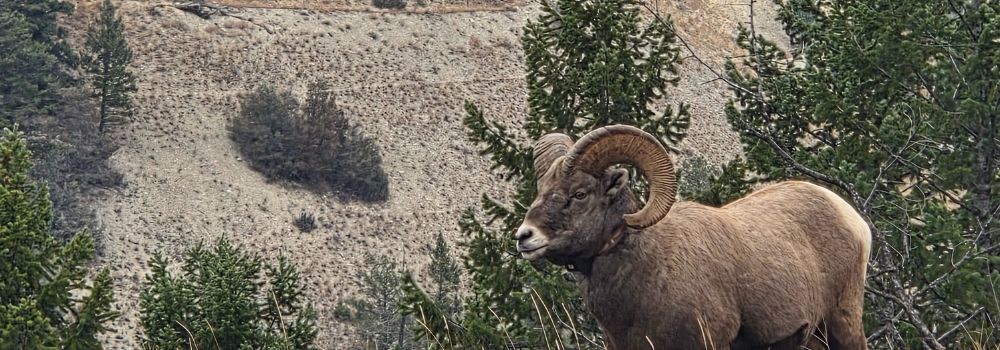
Living Among the Bighorn Sheep
Living Among the Bighorns: What We’re Learning in Radium Hot Springs
Moving to Radium Hot Springs, BC has opened an entirely new world for us - one shaped by towering peaks, quiet valleys, and a wildlife community that feels as though it flows right through town. Among all the animals that call this area home, none have captured our curiosity and admiration quite like the Rocky Mountain Bighorn Sheep.
While we’d occasionally see bighorns during our years living in Alberta, we seldom had long, uninterrupted time to observe them. Life was busy, moments were fleeting, and opportunities often passed by too quickly. But here in Radium, everything is different. These magnificent animals are woven into the daily rhythm in the village of Radium Hot Springs. They wander through the village, graze along the roadsides, stretch out on the boulevards, and materialize in the most unexpected places - from the golf course greens to someone’s front lawn.


And for us, being new to Radium, it has felt like stepping into a living wildlife documentary.
A New Adventure in Observation
When we first got into wildlife photography, like many others, we thought it was all about getting that awesome shot. But we quickly learned to get those awesome images, it takes a lot of patience - and knowledge. You first have to get to know the animal; where it lives, when it eats, what it eats and most importantly its' signs of stress - they will often let you know when they're not happy you're around and it's time to move on.
So spending time with the rams, ewes, and lambs has become a cherished part of our routine. Whether we head out specifically to photograph them or simply spot them on a daytime drive, every encounter teaches us something new. Over time, we’ve become more attuned to the subtle details that reveal so much about their behaviour and their social structure.
The most fascinating discoveries have come from observing the rams. Each carries himself differently, and when you start to pay attention, the signs of hierarchy become obvious. The dominant rams walk with an unmistakable confidence - head lifted high, posture strong, stepping forward with purpose. Their age and experience show in their horns and the calm authority in how they move.
Getting to Know the Rams, One Horn at a Time
One of Stan’s favourite parts of photographing bighorns is identifying the individuals. Unlike many species where it’s difficult to tell one from another, rams are wonderfully distinguishable by the curl, sweep, chips, and wear patterns of their horns.
Some curls are thick and tightly wrapped; others stretch in wide, elegant arcs. Some tips are sharp; others are broken. Some horns show heavy ridging from years of growth; others have smoother lines. Before long, you start recognizing personalities based on appearance - the calm, wise elders; the ambitious younger rams; the quirky characters with unique horn shapes. Can you image how obscured the vision is of the big ram below - yet he still manages to maintain his dominance throughout the area.


Some of the rams we’ve photographed wear the evidence of past battles openly: chipped horn tips, cracked ridges, and deep grooves carved into the keratin over years of rut-season collisions. Each scar is a badge, a testament to countless challenges and the harsh realities of earning and keeping a place at the top.


It's been interesting to watch as younger or lower-ranking rams tend to step aside, glance away, or pause when the bigger rams approach. These small exchanges - quiet moments you’d miss unless you were really watching - tell the story of who’s who within the herd. Such is the case anytime we see the big ram with the extra long curl in one horn - here he has 2 ewes in front of him during the rut, while the other ram looks on. We never did see another ram confront him so we've aptly named him "The Lord of the Ridge."

Living here long-term means we’re beginning to know them the way locals know their neighbours. It's a joy we never imagined we’d have.
The Intensity of the Rut
Bighorn sheep live lives defined by rugged terrain and constant adaptation. Ewes typically live 10–14 years, giving birth to 1-2 lambs a year, usually starting in their 3rd year. Rams, with their heavier bodies and the intense physical toll of dominance battles, usually live 9–12 years. Their shorter lifespan is not a weakness, but a reflection of the immense energy they pour into survival, hierarchy, and breeding.
While photographing these animals, we’ve learned that dominance is rarely accidental. Large rams don’t just rely on brute force - they communicate constantly. Below, one image captures a ram stripping bark and brush with his horns, a behaviour that serves both practical and symbolic purposes. By rubbing and thrashing vegetation, rams sharpen their horns, relieve irritation, and leave behind scent from glands near their eyes - quietly announcing their presence to rivals and ewes alike.
The other image shows a ram standing tall, nose lifted to the air, sampling the scents carried on the mountain breeze. During the rut, a ewe’s estrus cycle averages 28 days, but she is receptive for only about 48 hours. Rams depend heavily on scent to determine when that brief window opens.
The rut is a short but exhausting season, and it demands everything a ram has. A dominant ram may mate with three to four ewes in a single day, meaning that in theory, one ram could mate over 120 times during the rut. In reality, success depends on many factors-his age, physical condition, terrain, competition from younger rivals, and how many receptive ewes are available.
By the time the rut ends, the cost is visible. One of the most telling moments we’ve witnessed was this ram lying down, eyes closed, completely spent, resting after weeks of relentless movement, vigilance, and effort.


Understanding the Purpose of Radio Collars
You may notice that some bighorn sheep in the Radium area wear radio collars. These collars are part of long-term monitoring and conservation programs led by Parks Canada, wildlife biologists, and local researchers. Far from being intrusive, they play a crucial role in protecting the herd.
Collars help wildlife experts:
-
Track seasonal movement and migration patterns
-
Monitor herd health and population changes
-
Understand predator interactions and mortality events
-
Identify how traffic, tourism, and human activity impact the sheep
-
Improve long-term management and habitat protection
This information helps guide decisions that keep both wildlife and people safe. Everything from speed-limit enforcement to wildlife overpasses to vegetation management can be influenced by the data collected.

The New Bighorn Sheep Overpass
Another fascinating part of living in Radium Hot Springs is witnessing just how much effort goes into protecting the local bighorn herd. Along with radio collars - the region recently celebrated a major conservation milestone: the construction of a new bighorn sheep overpass on Highway 93/95.
This wildlife overpass, built at the south entrance to Radium, is designed specifically to reduce collisions and provide a safer, more natural movement corridor between seasonal habitats. For decades, this stretch of highway has been one of the most dangerous for bighorn sheep, especially during the rut and during winter months when the animals frequently come down to lower elevations.
The overpass serves several key purposes:
-
Reduces wildlife–vehicle collisions, protecting both animals and drivers
-
Restores traditional movement routes that were disrupted by increasing traffic
-
Improves long-term herd health by allowing safer access to feeding and escape terrain
-
Supports genetic diversity by enabling better mixing between sub-herds
-
Works hand-in-hand with radio collar research to track how sheep adapt to the new structure
It’s already becoming an important part of conservation efforts in the Columbia Valley. As we continue photographing the herd and learning more about their patterns, it’s been remarkable to watch how quickly they’ve begun using the crossing - a hopeful sign that this investment will have lasting benefits. Shortly after the overpass was opened, we saw the bighorn sheep using it quite comfortably - what a wonderful achievement!


Sharing Space With the Bighorns: Safety Matters
Living in Radium means learning to share the landscape - and the roads - with the bighorns. They roam wherever they wish, often with little concern for vehicles, yards, fences, or fairways. It’s charming and magical, yes, but it’s also a reminder to stay deeply aware while driving through the area.
Drivers should be especially cautious because:
-
Bighorns frequently cross highways without warning
-
They often graze along the shoulder, hidden by curves or shrubs
-
They move through residential neighbourhoods as if they’re part of the community
-
During rut season, rams can be distracted or unpredictable
-
Young lambs sometimes lag behind, difficult to spot until the last second


Whether you’re here for a visit or you live in the valley year-round, slowing down and staying alert is essential for their safety - and ours.
A Deeper Connection to the Land
Every day we spend in Radium reinforces how deeply intertwined this landscape is with wildlife. The bighorns aren’t just animals that wander through - they are part of the soul of the valley. Watching them, learning from them, and photographing their quiet moments has deepened our connection to this place in ways we will forever cherish.
Being new to Radium has offered us countless adventures already. And the more time we spend with these remarkable animals, the more rooted we feel in this mountain town. The bighorns have, in their own gentle way, welcomed us home.
Read more
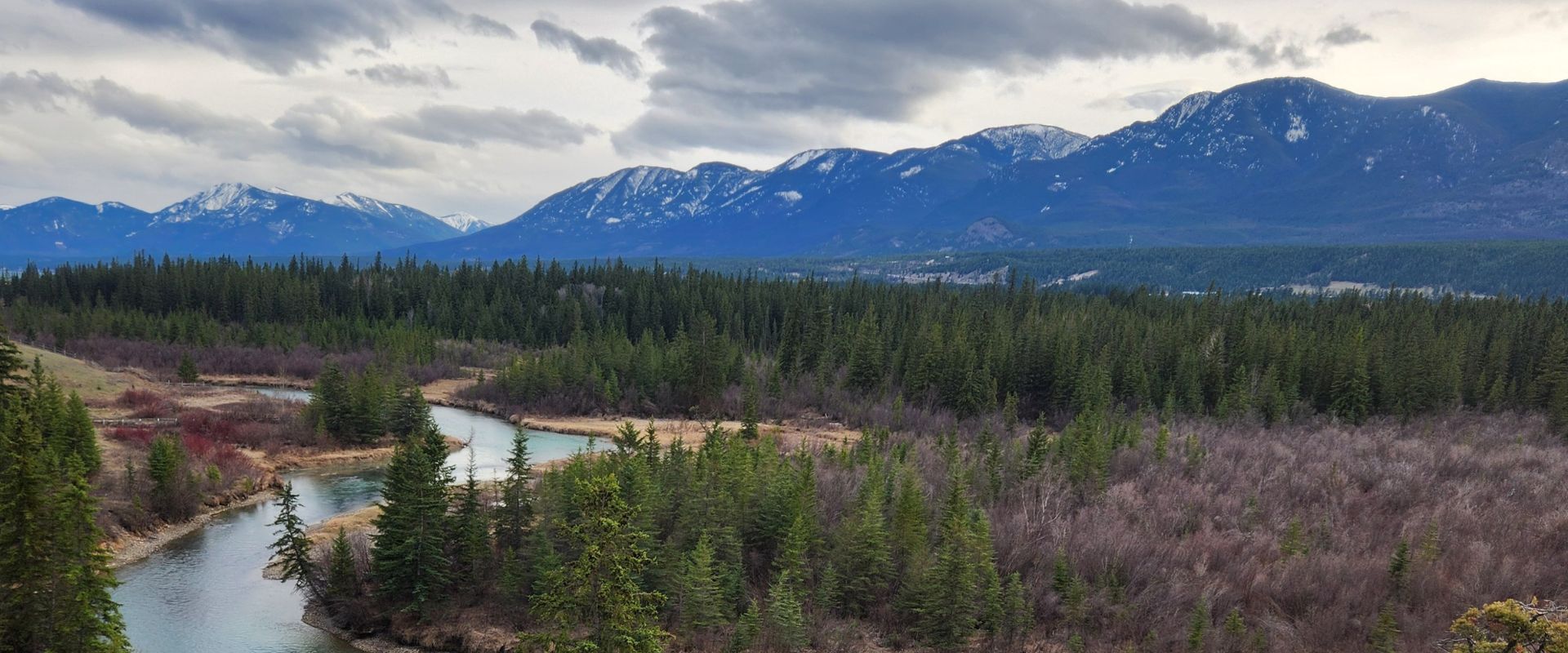
Fall Bird Migration in the Columbia Valley: A Season of Change
The Columbia Valley in British Columbia is a spectacular corridor for bird migration, and fall brings some of the most dramatic changes in our feathered population. As the seasons shift, we witness...
Read more
What Happens Behind the Scenes
On a freezing fall morning in the Rocky Mountains, patience and perseverance rewarded Keltie and Stan with a rare wildlife moment - a bull moose rising from frost-covered willows, revealing just ho...
Read more
Leave a comment
This site is protected by hCaptcha and the hCaptcha Privacy Policy and Terms of Service apply.